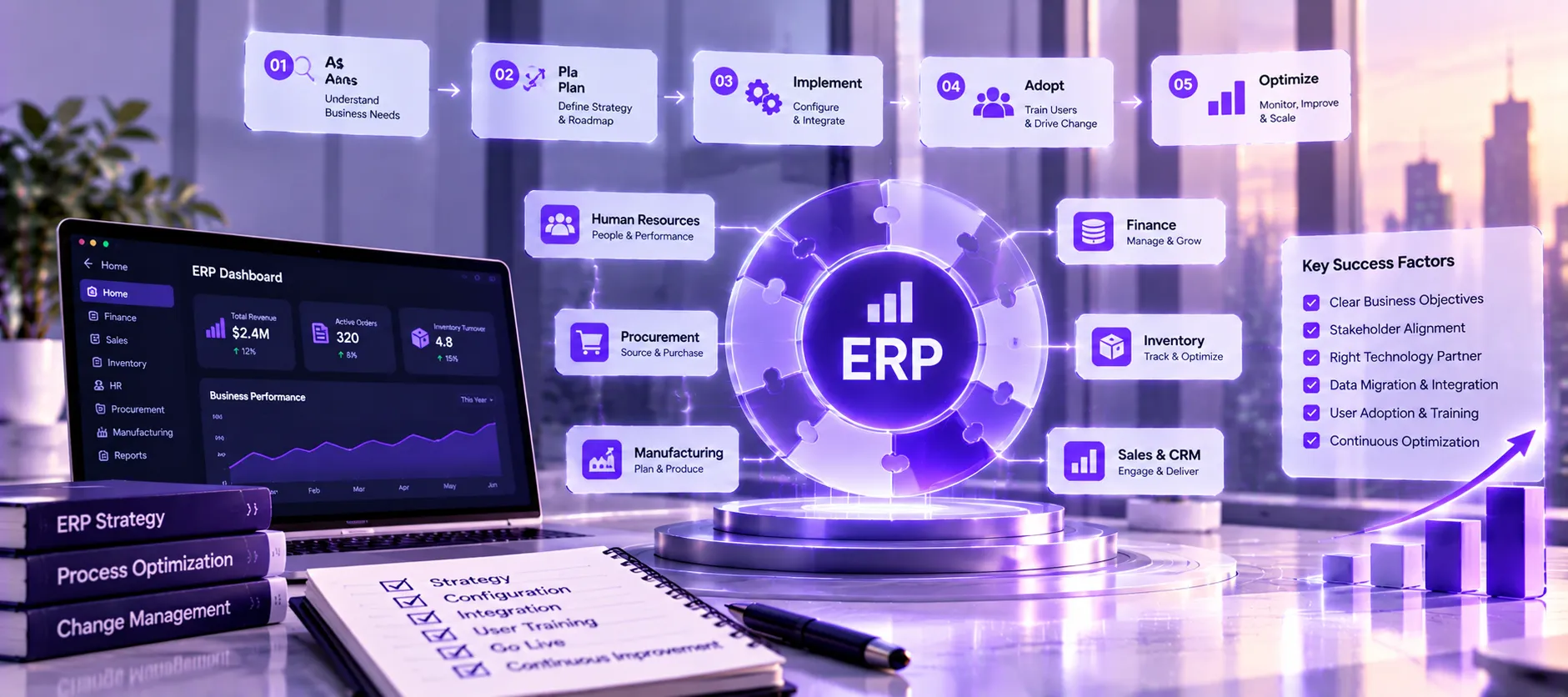
Master Salesforce consulting in 2026 with our complete guide on services, costs, ROI, and strategy. Read now to maximize your enterprise transformation.
The Complete Salesforce Consulting Guide: Services, Costs, ROI & Strategy
Salesforce has evolved far beyond a basic customer relationship management tool. Modern enterprises run their core operations across Sales Cloud, Service Cloud, Data Cloud, and advanced automation platforms. This massive expansion creates incredible opportunities alongside deep organizational complexity. When internal teams struggle to configure these advanced features, outside expertise becomes essential. Strategic guidance helps organizations turn software licenses into actual business outcomes.
What is Salesforce consulting?
Salesforce consulting is a specialized professional service that helps businesses plan, implement, customize, and optimize their Salesforce environments. Experts analyze existing workflows, design system architectures, migrate data, and train internal teams to drive long-term platform adoption.
Industry research indicates that over seventy percent of CRM initiatives fall short of initial expectations due to poor user adoption and misaligned configurations. Professional consultants bridge this gap by aligning technical architecture directly with core business metrics.
How does Salesforce consulting drive enterprise transformation?
Salesforce consulting drives enterprise transformation by connecting disparate sales, service, and marketing workflows with unified enterprise data and analytics. Instead of treating the platform as a simple database, expert partners restructure business processes to leverage modern artificial intelligence and automation features.
Organizations often approach consulting as a quick fix for broken code. In practice, transformation requires a complete operational overhaul. When expanding into custom development projects or building advanced AI solutions, external partners ensure that every custom component scales securely without creating technical debt.
Why is a foundational assessment phase critical?
A foundational assessment phase is critical because it uncovers hidden workflow bottlenecks, maps data dependencies, and establishes clear baseline metrics before any code is written. Skipping this step leads to bloated configurations and wasted software investments.
Conduct thorough workflow mapping across departments to identify friction points.
Distribute pain-point surveys to frontline users who interact with the CRM daily.
Gather baseline metrics on customer acquisition speed, case resolution times, and data accuracy.
Prioritize investment based on findings that target the highest tangible return on investment.
How do you prioritize use cases for maximum impact?
You prioritize use cases by scoring potential projects across two distinct axes: business impact and technical feasibility. High-impact, high-feasibility candidates form your initial wave of pilot projects.
Score opportunities by potential time saved, risk reduction, and client value.
Evaluate technology readiness, data cleanliness, and implementation complexity.
Select low-risk, high-reward workflows for your first implementation phase to secure quick internal wins.
Establishing robust operational governance
Operational governance goes far beyond basic system security and user permissions. A formal governance framework defines acceptable use rules, data handling boundaries, and clear accountability for automated outputs. Without a dedicated governance committee, organizations quickly experience duplicate data entry, rogue automations, and compliance failures. Establish a cross-functional team including IT leaders, business analysts, and department heads to review proposed configuration changes regularly.
Validation and fact-checking protocols
Modern Salesforce environments heavily incorporate automated insights and machine learning predictions. Organizations must implement mandatory multi-layer review protocols for any automated customer communication or data scoring model. Always verify automated outputs against primary data sources before scaling workflows enterprise-wide. Skipping validation steps often damages customer trust and introduces severe data corruption issues.
Structured training and adoption protocols
Even the most sophisticated Salesforce architecture fails if employees refuse to use it. Build a comprehensive training program that covers practical tool usage, efficient daily workflows, and adherence to your governance guidelines. Utilize flexible delivery formats such as bite-sized on-demand modules and internal champion networks to support busy professionals without disrupting their daily productivity.
Measuring ROI and evolving your business model
Connecting pilot success to measurable metrics ensures ongoing executive buy-in. Track improvements in sales turnaround speed, customer service resolution rates, and administrative hours saved. Extend your tracking beyond internal efficiency to evaluate strategic outcomes, such as how streamlined data enables new value-based pricing models and superior market positioning. Similar principles apply when optimizing broader enterprise systems, much like the operational strategies discussed in our guide on CRM software and business growth.
Your Salesforce transformation roadmap
A structured roadmap turns overwhelming platform capabilities into manageable execution phases. Review the following sequential phases to guide your consulting journey successfully.
Assess and Strategize: Map current workflows, identify critical bottlenecks, and establish baseline metrics to target high-impact business outcomes.
Pilot and Learn: Score use cases by feasibility and impact, launching small-scale pilots to validate architecture before a full rollout.
Govern and Secure: Implement formal operational governance, acceptable use policies, and multi-layer validation protocols for all automated outputs.
Train and Adopt: Deploy structured training programs utilizing internal champions and bite-sized modules to drive long-term user adoption.
Measure and Evolve: Track quantitative ROI metrics, refine workflows continuously, and adapt your business model to capitalize on improved data visibility.
Navigating complex Salesforce implementations requires a trusted partner who understands both technical architecture and business strategy. By following a disciplined roadmap and prioritizing adoption, your enterprise can unlock the full transformative power of the platform.
Salesforce Transformation Roadmap Phases
| Phase Name | Core Objective | Key Activities |
|---|---|---|
| Assess and Strategize | Identify baseline metrics and target high-impact outcomes | Map current workflows and identify critical operational bottlenecks |
| Pilot and Learn | Validate system architecture before a full-scale rollout | Score use cases by feasibility and launch small-scale pilot projects |
| Govern and Secure | Establish control frameworks for platform stability | Implement formal governance, acceptable use policies, and validation protocols |
Frequently asked questions
Salesforce consulting is a specialized professional service that helps businesses plan, implement, customize, and optimize their Salesforce environments. Experts analyze existing workflows, design system architectures, migrate data, and train internal teams to drive long-term platform adoption.
Industry research indicates that over seventy percent of CRM initiatives fail to meet initial expectations due to poor user adoption and misaligned configurations. Professional consultants bridge this gap by connecting technical architecture directly with core business metrics.
A foundational assessment phase uncovers hidden workflow bottlenecks, maps data dependencies, and establishes clear baseline metrics before any code is written, preventing bloated configurations and wasted investments.
Organizations should prioritize use cases by scoring potential projects across two axes: business impact and technical feasibility. High-impact, high-feasibility candidates form the initial wave of pilot projects to secure quick internal wins.
ROI can be measured by tracking improvements in sales turnaround speed, customer service resolution rates, and administrative hours saved, as well as evaluating strategic outcomes like value-based pricing enabled by streamlined data visibility.
Strategists, designers and AI engineers at CreateBytes, sharing what we learn building AI products, apps and brands for founders and enterprises.
More articles →